Chasing Losses, Khanapara Teer
A practical guide to chasing losses for khanapara teer result: the steps, the limits and the common mistakes.
What Is Chasing Losses in Khanapara Teer?
Chasing losses means placing additional bets on the khanapara teer result specifically to recover money lost on earlier rounds. In practice it looks like this: you staked ₹50 on FR (First Round) number 42, the result came 67, and now you double or triple your SR (Second Round) stake trying to "win it back" in the same session. The behaviour feels rational in the moment because the payout odds on a correct teer number, typically ₹80 returned per ₹1 staked at most Khanapara counters, seem to promise easy recovery. They do not. The probability of hitting any single number remains roughly 1-in-100 regardless of your previous result.
Khanapara Teer runs two result windows every working day, FR at approximately 3:45 PM and SR at approximately 4:45 PM IST. That one-hour gap between rounds is the most common trigger point where players shift from calculated play into loss-chasing behaviour. The short interval creates a sense of urgency that does not exist in other Indian lottery formats such as Kerala Lottery or Dear Lottery, where draws happen once a day and the next opportunity is 24 hours away. With Khanapara Teer, the next round is just 60 minutes out, close enough to feel like the same session, far enough to seem like a fresh start.
A Concrete Rupee Example
Suppose your planned daily budget is ₹150. You allocate ₹80 to FR, backing numbers 34, 56, and 78 at roughly ₹26 each. All three miss. The emotional pull now is to put the remaining ₹70 plus extra into SR, say ₹200, to recover the ₹80 loss and "still finish the day up." If SR also misses, you have spent ₹280 instead of ₹150. To recover ₹280 the next day at the same stake level would require hitting a number, and the probability of doing that on any given day remains approximately 1%.
The deficit compounds, the daily budget balloons, and what started as a ₹150 hobby becomes a ₹800-per-week problem within a month.
Why Teer Results Make Chasing Feel Logical
- Hot-number illusion: If 56 hit yesterday and you backed 56 today without success, it feels statistically "due." Teer results are independent draws, past arrows do not influence today's count. This is structurally different from skill-based games and must be understood clearly.
- Low ticket price anchoring: Minimum stakes in Khanapara Teer counters are often ₹1 to ₹10 per number, making it easy to rationalise "just one more." Those small amounts compound quickly across 10 to 20 numbers in a single SR panic session.
- Result proximity: Losing by one digit (e.g., you backed 34, result was 35) feels like near-miss luck that "almost" paid off. Research on near-miss effects, well-documented in gambling behaviour studies, shows that near-misses increase the urge to continue playing more than outright losses do. Teer's two-digit format generates frequent near-misses.
- Comparison with Shillong Teer: Shillong Teer also runs two rounds, but FR closes at 3:45 PM and SR at 4:45 PM with slightly different result timings. Players who follow both games often use a Shillong miss as further justification to chase harder on Khanapara SR, compounding exposure across two separate games simultaneously.
Understanding the mechanism is the first step. Chasing is not a strategy, it is a cognitive response to loss aversion, and recognising it in real time is what separates disciplined players from those who leave the counter with empty wallets every week.
Chasing Losses Tips and FAQs for Khanapara Teer Players
These tips are specific to the Khanapara Teer format, two-round daily results, number range 00 to 99, and counter-based cash staking. They are not generic gambling advice repackaged; each one addresses a real behaviour pattern observed at Khanapara counters in Guwahati and surrounding areas.
Practical Tips to Break the Chasing Cycle
- Set a per-session loss limit before you check the FR result. Decide in advance, for example ₹200 per day, and treat the SR as a separate session with its own sub-limit of ₹100, not a recovery vehicle for FR losses. Write the number in your phone's notes app before 3:45 PM so it is timestamped and you cannot retroactively claim you planned a higher limit.
- Do not increase stake size after a loss. If you normally back five numbers at ₹10 each (₹50 total), keep that stake flat for SR regardless of the FR outcome. Flat staking means your maximum daily exposure is always ₹100, predictable and survivable even on a losing streak.
- Avoid switching number sets mid-session. Players often abandon their researched numbers after FR and scatter bets across 15 to 20 numbers in SR hoping to "cover more ground." At ₹10 per number, covering 20 numbers in SR alone costs ₹200, more than double a disciplined full-day budget. Wider coverage at elevated stakes is still chasing; it just feels like a system.
- Log every bet using PhonePe or Google Pay transaction history as a cross-reference. If you fund your counter visits by withdrawing from a linked account via PhonePe, GPay, or BHIM, your UPI transaction history provides an automatic, uneditable record of how much cash you withdrew on each teer day. Compare that figure against your wins. Many players discover their actual net loss is two to three times what they estimated mentally.
- Use the one-hour FR-to-SR window deliberately. Instead of rushing to the counter with a reactive stake, use that hour to re-evaluate your numbers with a clear head. Check the Khanapara Teer result on khanaparateer.in.net, compare it against your pre-session number research, and confirm your SR pick is based on analysis, not on the desire to recover ₹80. If the only reason you are changing your pick or increasing your stake is to chase, skip SR entirely and save that budget for the next day.
- Keep a simple weekly spreadsheet. Columns: date, FR number backed, FR result, FR stake, SR number backed, SR result, SR stake, day net. Total the net column every Sunday. Seeing ₹-1,400 in seven days of numbers is more concrete than a vague feeling of "I've been a bit unlucky lately."
Step-by-Step: How to Use GPay History to Audit Your Teer Spending
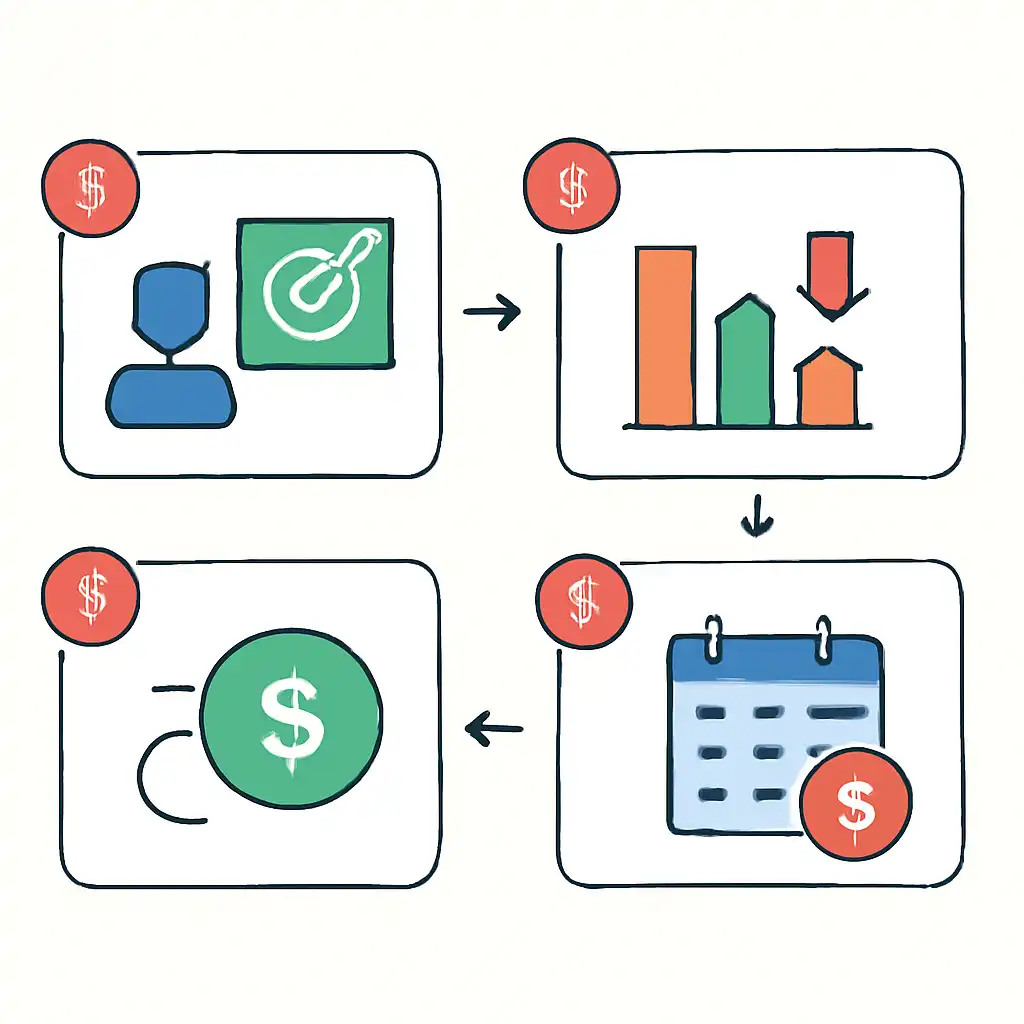
- Open Google Pay → tap your photo/icon top-right → select "Manage Google Account" is not needed; instead go to the main screen and tap the transaction history icon.
- Filter by the last 30 days.
- Search for ATM withdrawals or cash-out transactions that coincide with teer days (Monday to Saturday, around 3 PM to 5 PM IST).
- Total those withdrawals. Subtract any documented non-teer expenses from that cash.
- Compare the remainder to your recorded winnings. The difference is your actual net teer spend, not your estimated one.
BHIM UPI users can access the same data under "Transaction History" in the BHIM app. PhonePe users can export a statement from Profile → Bank Accounts → Statement for a date range, making the audit even faster.
- Is there a number pattern I can use to recover losses faster?
- No. Each Khanapara Teer result is determined by the physical count of arrows hitting the target that day. Common result and house-number lists published on teer result pages are observations of past data, not predictive tools. Staking more on a "common" number does not improve your probability of recovering losses, it only increases the amount you lose if the number misses again.
- Should I wait for a "dry spell" of a number to end before backing it?
- This is the gambler's fallacy applied to teer. A number that has not appeared in 30 days is not statistically overdue. Each day's arrow count resets independently of every previous day. Compare this to a coin flip, a coin that has shown heads 10 times in a row still has exactly 50% probability of heads on flip 11. Teer numbers work the same way across a 0 to 99 range.
- Can doubling my stake on SR offset an FR loss?
- Mathematically, doubling your stake on a single number gives you a higher nominal payout if it hits, at ₹80-per-₹1 odds, a ₹100 stake returns ₹8,000 versus ₹4,000 for a ₹50 stake. But the probability of hitting remains roughly 1-in-100. If SR also misses, the more common outcome, you have now lost your original FR stake plus double your planned SR stake. A ₹50 FR loss combined with a ₹200 SR chase that also misses puts you down ₹250 instead of ₹100.
- What if I only chase occasionally, not every day?
- Occasional chasing is still chasing, and it is worth auditing honestly. Pull your GPay or PhonePe history and flag every day where your afternoon withdrawal was larger than your planned daily budget. If that happens more than twice in a month, "occasional" is understating the pattern. Tracking removes self-deception from the equation.
- Is chasing more dangerous in Khanapara Teer than in other games?
- Compared to single-draw lotteries like Nagaland Dear Lottery or Sikkim State Lottery, which have one result per day, Khanapara Teer's two-round structure creates twice the number of decision points per session. More decision points means more opportunities for reactive staking. The risk is structural, not just personal.
Chasing Losses Safety and Timing in Khanapara Teer
Timing is a uniquely concrete issue in Khanapara Teer because the game has fixed, published result windows. That structure can be used to your advantage to build hard stopping rules into your routine, rules that are attached to the clock rather than to how you feel after the FR result.
The Critical Timing Windows
| Time (IST) | Event | Risk Level | Recommended Action |
|---|---|---|---|
| Before 3:30 PM | FR betting open | Low | Place pre-planned FR bets only; stake already decided |
| ~3:45 PM | FR result declared on khanaparateer.in.net | High | Check result, do not approach counter for at least 10 minutes |
| 3:45 PM to 4:15 PM | SR betting window (early) | Highest | If SR bets were pre-planned, place them now at the fixed stake; otherwise wait |
| 4:15 PM to 4:40 PM | SR betting window (late) | High | Do not increase stakes in this window; last-minute stake inflation is almost always chasing |
| ~4:45 PM | SR result declared | Medium | Session ends; record result; no further staking until next day |
Safety Rules Tied to These Windows
- Rule 1, The 10-minute pause: Do not approach the counter during the first 10 minutes after the FR result is declared (approximately 3:45 PM to 3:55 PM). Emotional decisions, larger stakes, more numbers, panic switching, are concentrated in that window. Step away from the counter physically, check the result on your phone, and let the initial reaction pass before re-engaging.
- Rule 2, SR stake cap at 150% of FR stake: Your SR stake must never exceed 150% of your actual FR stake, not your planned stake, but what you physically spent on FR. If your FR stake was ₹80, SR cannot exceed ₹120. Set this cap before the season, not after FR misses. This is not a recovery formula; it is a hard ceiling regardless of outcome.
- Rule 3, No same-day re-entry after two consecutive misses: If FR and SR both miss, do not seek an alternative counter, an informal arrangement, or any other game the same evening to "settle the debt." Evening informal teer markets exist in some areas around Guwahati; these carry additional risks beyond result legitimacy and must be avoided entirely as a chasing outlet.
- Rule 4, Pre-place SR bets before the FR result where the counter allows it: Some Khanapara Teer counters accept SR bets before the FR result is announced. If your counter does this, place your SR bet at your pre-decided flat stake before 3:45 PM. The decision is then locked, you cannot inflate it in reaction to the FR result because the bet is already in.
- Rule 5, Sunday review using UPI history: Khanapara Teer does not operate on Sundays. Use that gap to open PhonePe, GPay, or BHIM, pull the past six days of cash withdrawals, and compare them against your recorded winnings. If Saturday's withdrawal was double Monday's, the escalation pattern is visible in data, not just in memory.
Recognising When to Stop Immediately
Leave the counter immediately during the SR window if you observe any of the following in your own behaviour:

- You are backing more than 20 numbers in SR when your FR coverage was five or fewer (scattershot chasing)
- Your SR stake in rupees is more than twice your original planned daily budget
- You have made or are considering making a UPI transfer, via PhonePe, GPay, or BHIM, specifically to fund a larger SR bet
- You are selecting numbers based on gut reaction or a random method rather than any pre-session analysis
- You feel that leaving without placing the SR bet is "giving up" or "admitting defeat"
If chasing has become a recurring pattern that feels difficult to interrupt, the Vandrevala Foundation helpline (1860-2662-345, available 24 hours, seven days a week, free, confidential, available in Hindi and English) provides support for gambling-related concerns without judgment. iCall (9152987821) is another India-based option offering psychological counselling.