Ignoring Deposit Limits, Khanapara Teer
Ignoring deposit limits: what Indian khanapara teer result players need to know before they start, in plain language.
What Is Ignoring Deposit Limits?
In the context of Khanapara Teer, a deposit limit is a self-imposed or platform-imposed ceiling on how much money a player can load into their betting account within a set period, daily, weekly, or monthly. Ignoring deposit limits means consistently bypassing, raising, or dismissing those ceilings without pausing to assess whether the decision is financially sound.
Khanapara Teer draws take place twice each afternoon at the official teer counter in Guwahati, Assam. The first-round result is announced at roughly 3:45 PM and the second round at roughly 4:45 PM. Because the game runs every weekday, the temptation to reload a betting account after a losing session is never far away, results arrive again the very next day. That daily rhythm is precisely what makes deposit-limit discipline so important and deposit-limit neglect so costly.
Players often rationalise ignoring limits with beliefs such as "today's number feels certain," "I only need one good hit to recover," or "the FR/SR pattern is due to break." None of those beliefs change the underlying probability of the game. A limit exists as a circuit-breaker against exactly this kind of reasoning. When the circuit-breaker is switched off, losses that would have been contained across several sessions can instead accumulate in a single afternoon.

Responsible play on any platform that accepts real-money Khanapara Teer wagers starts with understanding the deposit-limit tools that platform provides. To verify that a platform is legitimately licensed to accept such wagers in India, visit the relevant state gaming or lottery authority's own website directly, not a third-party results page, and look up the operator by name in the authority's public register.
Ignoring Deposit Limits Step by Step
Understanding how deposit-limit neglect unfolds in practice helps players recognise the pattern before it takes hold. The sequence below reflects common behaviour reported by teer bettors who later sought to rebuild healthier habits.
- The initial cap feels comfortable. A player sets a weekly deposit limit, say, ₹500, at the start of the month. For the first week the limit feels more than adequate.
- An early losing run triggers the first override. After three consecutive missed numbers across the first-round and second-round draws, the player decides ₹500 is "too tight to recover." They raise the limit or ignore the platform's warning and make an additional deposit before the next session.
- A small win reinforces the override. If the next bet wins, the player credits the extra deposit, not luck, for the recovery. The lesson learned is the wrong one: that raising limits produces better results.
- Limit warnings become background noise. Platforms that display spending warnings at the threshold begin to feel intrusive rather than helpful. The player dismisses notifications without reading them.
- Session lengths expand invisibly. Because each Khanapara Teer result is a short, discrete event, it is easy to frame "one more top-up" as a minor decision. Over a month, minor decisions compound into a total deposit figure that would have alarmed the player at the outset.
- Recovery mode entrenches the cycle. Attempting to win back losses by depositing more is the most predictable driver of escalating spend. Recognising this stage early, before the next FR or SR result is announced, is the clearest opportunity to reset.
Khanapara Teer result numbers are drawn from archery rounds involving licensed shooters; no external system can predict the count. Any strategy that requires unlimited deposits to "eventually" work is not a strategy, it is an open-ended financial commitment with no guaranteed endpoint.
Ignoring Deposit Limits, Safety and Timing
Timing is the underappreciated dimension of deposit-limit discipline for Khanapara Teer players. Risk is not evenly distributed across the day or the week; it clusters around specific moments.
The post-result window
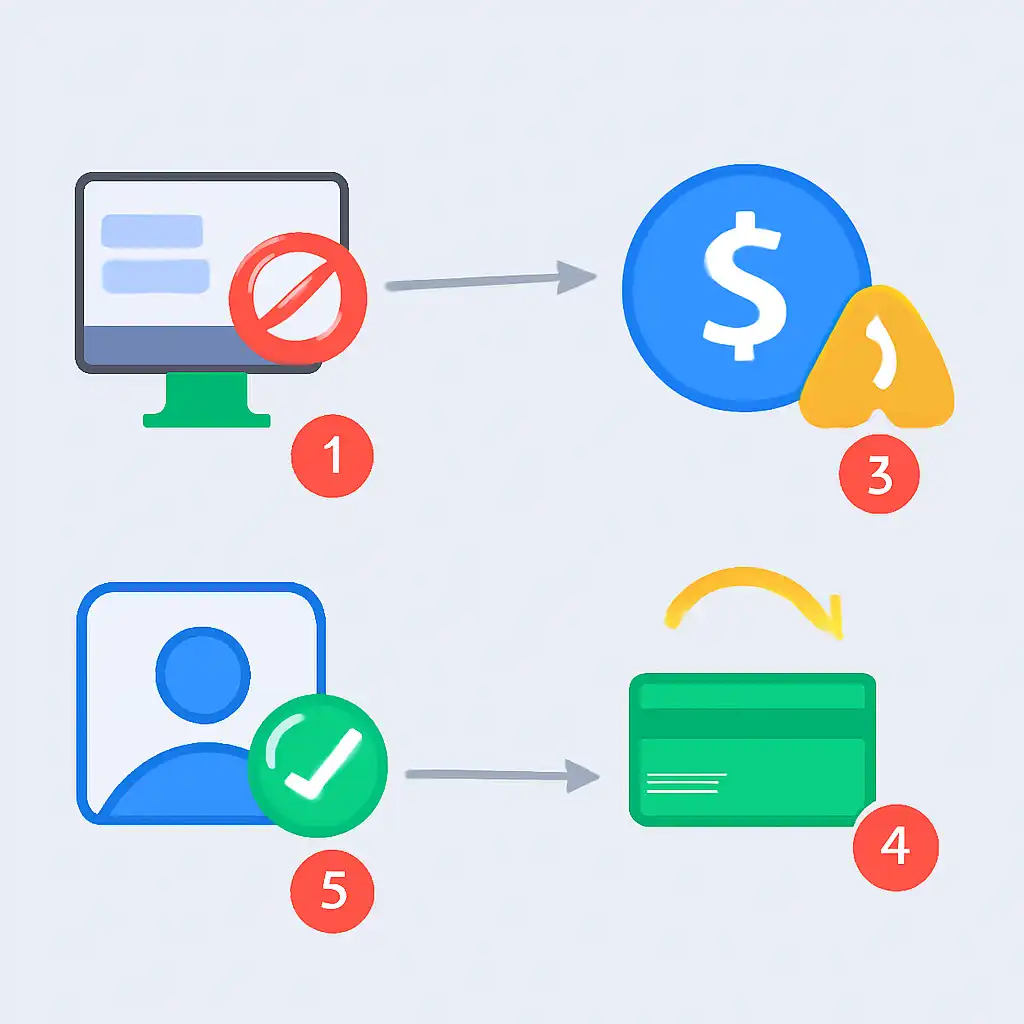
The minutes immediately after the first-round result (announced around 3:45 PM) and the second-round result (announced around 4:45 PM) are when deposit-limit decisions are most emotionally charged. A player who checks the official result, published by the Khanapara Teer Counter and accessible through Meghalaya's Directorate of State Lotteries communications, and finds they missed will be in a state of mild disappointment. That emotional state is when override decisions feel smallest and carry the largest long-term cost.
Weekly and monthly resets
Many platforms reset deposit counters at the start of a calendar week or month. Players who have exhausted their limit late in a period sometimes wait for the reset as a perceived "fresh start." Using a reset purely to extend a losing run, rather than genuinely reassessing the staking approach, reproduces the same pattern on a longer timescale.
Practical safety steps
- Set your deposit limit before the teer season begins for the week, not during it. Pre-session decisions are made with a clearer head than mid-session ones.
- Write the limit down on paper or in a notes app outside the betting platform. Seeing an externally recorded figure makes it harder to mentally reframe an override as trivial.
- If a platform allows you to set a cooling-off delay before a limit increase takes effect, commonly 24 or 72 hours, activate that feature. It converts an impulsive override into a considered one.
- Cross-reference your total deposits for the month against the official results archive published by the Directorate of State Lotteries, Meghalaya. Seeing the actual hit-rate pattern across multiple draws in plain text is a reliable corrective to overconfidence about imminent wins.
- If deposit decisions are becoming distressing, the National Problem Gambling Helpline (1800-599-0019, toll-free in India) offers confidential support.
Ignoring Deposit Limits on Mobile
Mobile devices have materially changed how quickly and quietly deposit-limit decisions are made for Khanapara Teer result followers. Several features of the mobile environment work against limit discipline in ways that desktop browsers do not.
One-tap payment flows
Saved UPI IDs, wallets, and stored card details mean that a deposit can be completed in under ten seconds on a phone. There is no natural pause, no having to retrieve a physical card, no typing a long account number, that might otherwise create a moment of reflection. The gap between the emotional impulse to top up and the completed transaction has effectively collapsed.
Push notifications and result alerts
Betting apps commonly send push notifications when a new Khanapara Teer result is published. Receiving a loss notification via push, while the phone is already in hand, places the user one thumb-tap away from the deposit screen. This is the highest-risk moment for an unconsidered override. Turning off result-push notifications and instead checking results yourself at a chosen time (for instance, visiting the official Directorate of State Lotteries communications after 5:00 PM) restores a small but meaningful pause in the decision chain.
Screen-size and information density
Responsible gambling disclosures, limit warnings, and terms-and-conditions text that are prominently visible on a desktop layout are often collapsed, minimised, or placed below the fold on a mobile layout. Before making any deposit on a mobile app or mobile browser, scroll past the deposit button to read any warnings the platform is required to display. If no warnings appear at all, that is itself a signal worth noting.
Steps to protect yourself on mobile
- Use the platform's own mobile app settings, not just the website, to set or review your deposit limit. App-level limits are sometimes separate from web-level limits on the same account.
- Enable Screen Time (iOS) or Digital Wellbeing (Android) limits on the betting app. A system-level time gate is harder to override in an emotional moment than an in-app toggle.
- Remove saved payment methods after each session if your platform allows it. Re-entering payment details manually reintroduces the natural pause that one-tap flows remove.
- Check the official Khanapara Teer results by going directly to the Meghalaya Directorate of State Lotteries' own published communications rather than through a betting app's internal results feed. Separating result-checking from deposit access reduces the chance that one triggers the other automatically.
Mobile convenience is a genuine benefit for teer followers who simply want to stay informed about Khanapara Teer results. It becomes a liability when the same convenience is applied to financial decisions that deserve more deliberation than a ten-second tap sequence allows.